[Home] [CSHS] [Membership] [Area History] [Photographs] [Gift Store] [Museum Project] [Area Information]
AREA HISTORY
A THUMB NAIL SKETCH OF THE HISTORY OF THE CENTRAL SIERRA
The Sierra Nevada range was formed millions of years ago by the uplifting of the continental plate and the subsequent sculpturing of the range by glaciers, shifting of the land due to earthquakes and volcanic action plus erosion by the elements plus all these forces of nature working together over time to form the mountains, valleys, rivers and meadows as we know them today.
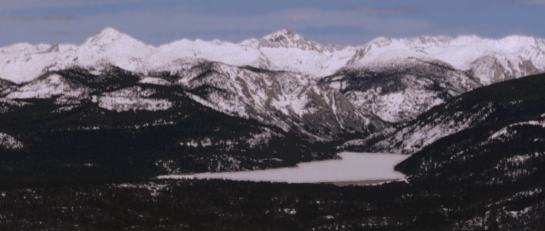
The deep Vermilion Valley beyond the impounded water of Thomas A. Edison Lake from Mono Creek leads to Mono Pass, one of many such crossing points used by the Mono and the Paiute tribes to the east in their early economic union. This trade, believed to have commenced about 5,000 BC ended in the early twentieth century as the Mono’s way of life changed forever as western pioneers moved in to reap other sierra resources for a growing California. These renewable resources of the sierra used by man are evident in this single photograph; grazing land, timber, hydroelectric power, irrigation water and mountain recreation.
The remainder of this area is still in work
The Mono Tribe (insert Mono Indian picture, to be supplied later)
It is believed human history in the Sierra began about 7,000 years ago with the arrival of Indian tribes in the Owens Valley to the east of the sierra crest. Some members climbed to the crest of the Sierra and descended down the west slope to the meadows. forests and streams which they found to be full of game, fish, berries and acorns, natural resources to support their way of life. They crossed this formidable barrier via high mountain passes during the short summer season to settle in the mid and lower elevations of the Central Sierra. They became known as the western Mono. They didn’t forget their roots to the east and conducted trade over the crest of the Sierra exchanging the resources of their new land for the mineral wealth to the east, namely obsidian, black volcanic glass, necessary for arrowheads and cutting tools upon which their hunting livelihood depended.
[Home] [CSHS] [Membership] [Area History] [Photographs] [Gift Store] [Museum Project] [Area Information]